
Bartholin Cyst
“Most women come in saying, ‘Doctor, I feel a small lump near the vaginal opening… it’s uncomfortable when I sit or walk.’ And they’re worried—because anything in that area feels alarming.”
Dr. Kausha adds a reassuring fact first: Bartholin gland cysts and abscesses are common and treatable—and many women experience them at least once in their lifetime. Medical literature notes that about 2% of women develop a Bartholin duct cyst or abscess during their lifetime.
At K.K. Speciality Clinic & Hospital (Dahisar East) and K.K. Medical Centre (Dahisar West), Mumbai, Dr. Kausha Shah focuses on two things: quick pain relief and the right treatment that reduces recurrence—so you can get back to normal life confidently.
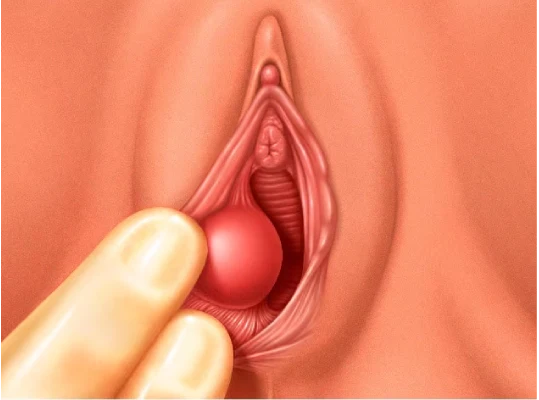
What is a Bartholin cyst (and why it happens)
A Bartholin cyst is a fluid-filled swelling that forms when the duct of the Bartholin gland gets blocked. These glands sit near the vaginal opening and help with natural lubrication. When the duct is blocked, fluid builds up and forms a cyst. If germs enter and infection develops, the cyst can turn into a Bartholin abscess, which is usually more painful and tender.
Many small cysts are painless and may go unnoticed. The problem starts when the swelling grows, becomes uncomfortable, or gets infected.
What most women say when they first notice the lump — Dr. Kausha Shah
“I thought it was just a pimple,” one patient says. “Then it became a lump, and sitting in the car started hurting. I felt awkward even to explain it.”
Dr. Kausha Shah hears this story often. Many women first notice a small swelling near the vaginal opening during a shower, while wiping, or after a long day of walking. At first it may feel like mild discomfort—but if it grows or gets infected, it can quickly become painful while sitting, walking, or during intercourse.
Her approach is calm and step-by-step:
- First, confirm whether it is a cyst or an abscess (infection).
- Next, choose the quickest safe relief—home care for small painless cysts, or a procedure if it’s painful/infected.
- Finally, plan treatment in a way that reduces recurrence, so it doesn’t keep coming back.
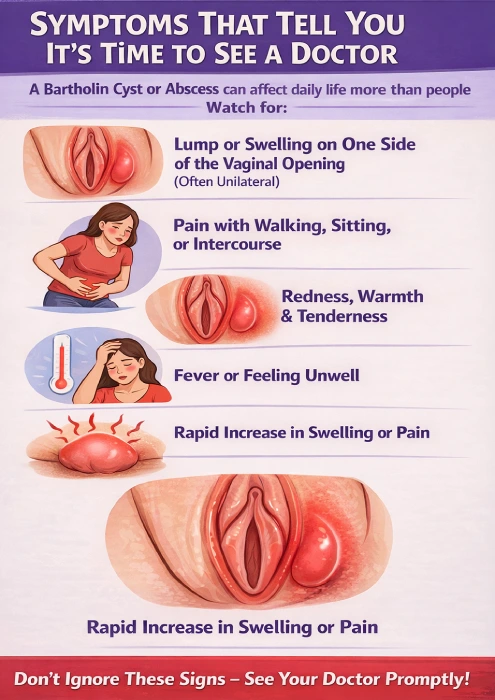
Symptoms that tell you it’s time to see a doctor
A Bartholin cyst/abscess can affect daily life more than people expect. Watch for:
- A lump/swelling on one side of the vaginal opening (often unilateral)
- Pain while walking, sitting, or during intercourse
- Redness, warmth, tenderness (more common in abscess)
- Fever or feeling unwell (can happen with abscess)
- Rapid increase in swelling or pain
If pain is severe or you feel feverish, don’t wait—abscesses can worsen quickly and usually need active treatment.
How it’s diagnosed at the clinic
Diagnosis is typically clinical—meaning the doctor can often identify it by examination and your symptoms. Dr. Kausha Shah will also check for:
-
Whether it feels like a simple cyst or a pus-filled abscess
-
Whether there is surrounding skin infection (cellulitis)
-
Your age and recurrence history (important for planning)
Important note for women 40+: If a new Bartholin-area lump appears after age 40, doctors often recommend biopsy (with or without excision) to rule out malignancy—not because cancer is common, but because it must not be missed.
Treatment options at K.K. — from home care to procedures (focus on what works)
Treatment depends on size, pain level, whether infection is present, and whether this is your first episode or a recurrence.
Home care (for small, non-infected cysts)
If the cyst is small and not very painful, Dr. Kausha may advise:
- Pain relief medicines if needed
- Avoiding friction/pressure on the area
- Review if swelling increases or pain starts
Some cysts settle with conservative care—especially early.
When infection or abscess is suspected (active treatment)
A painful Bartholin abscess usually needs drainage because pus under pressure causes the intense pain. The goal is fast relief and preventing recurrence.
Marsupialization — the longer-term solution for recurrent or troublesome cysts
If a cyst keeps returning, or if the swelling is persistent and bothersome, marsupialization may be recommended.
In simple terms:
The doctor makes an opening, drains the cyst, and then stitches the edges in a way that creates a small permanent opening for drainage—reducing the chance of re-blockage.
Dr. Kausha Shah often discusses marsupialization when:
- You have repeated episodes
- The cyst affects daily life regularly
- You want a more definitive solution
A key point: office procedures like Marsupialization generally have better long-term outcomes than needle aspiration or simple incision-and-drainage alone, which tend to recur more.
Do you need antibiotics? Not always — and that’s a good thing
Many patients expect antibiotics immediately. Dr. Kausha Shah explains this carefully:
- If the abscess is drained properly, antibiotics may be needed.
- Antibiotics are more likely if there is:
- Evidence of STI
- Surrounding skin infection (cellulitis)
- Urinary infection
- Fever/systemic illness or higher risk conditions
This “right use of antibiotics” approach helps avoid unnecessary medicines and still keeps you safe.
Dr. Kausha Shah at K.K. Speciality Clinic & Hospital
- Dr. Kausha Shah is a Gynaecologist & Obstetrician and Infertility Specialist with over 15 years of experience. She holds MRCOG (UK), DNB, FCPS, FICOG, DGO, and DFP qualifications. She consults at K.K. Speciality Clinic & Hospital (Dahisar East) and K.K. Medical Centre (Dahisar West), Mumbai, and is a distinguished member of the Indian Medical Association (IMA).
- She worked at NWMH from 2006 to 2009. She then served as an Assistant Professor at JJ Group of Hospitals from 2009 to 2011. From 2011 to 2013, she worked at KEM Hospital, where she also took on responsibilities as a Unit Head and Postgraduate Teacher (OBG-GYN), actively involved in clinical mentoring, training, and academic guidance of residents.
Patient Reviews
-
“I was panicking because the pain was sharp. Dr. Kausha explained it simply and treated it quickly. Huge relief.”
-
“Very professional and calm. The procedure was done smoothly and I was comfortable throughout.”
-
“I liked that she didn’t push unnecessary medicines. Clear explanation and proper follow-up.”
-
“The swelling had come back earlier elsewhere. Here I finally got a treatment plan that made sense.”
-
“Clinic is clean, staff is supportive, and Dr. Kausha is patient and confident.”
FAQ
Q. Is a Bartholin cyst dangerous?
Most are not dangerous, but they can become painful or infected. An abscess needs treatment for relief and safety.
Q. Can a Bartholin cyst go away on its own?
Small, painless cysts sometimes settle with warm sitz baths and observation.
Q. What’s the difference between a Bartholin cyst and abscess?
A cyst is fluid-filled and may be painless. An abscess is infected, often very painful, red, and tender.
Q. When is marsupialization needed?
Marsupialization is often advised for recurrent or persistent cysts/abscesses to reduce repeat blockage.
Q. I’m above 40—should I be worried about cancer?
Cancer is uncommon, but new Bartholin gland enlargement after age 40 should be evaluated carefully. Doctors often recommend a biopsy (with or without excision) to rule out malignancy.
Quick relief is possible — and recurrence can be prevented
A Bartholin cyst can feel scary because of its location, but it’s a very manageable condition when treated the right way. If it’s small, simple measures may help. If it’s painful or infected, procedures like marsupialization can provide fast relief and reduce the chance of it coming back.
Book an appointment
For evaluation and treatment with Dr. Kausha Shah at K.K. Speciality Clinic & Hospital (Dahisar East) or K.K. Medical Centre (Dahisar West), you can book via the hospital contact page or call:
K.K. Speciality Clinic & Hospital (Dahisar East): +91 9930775753
K.K. Medical Centre (Dahisar West): +91 90222 90406 | 98201 90406